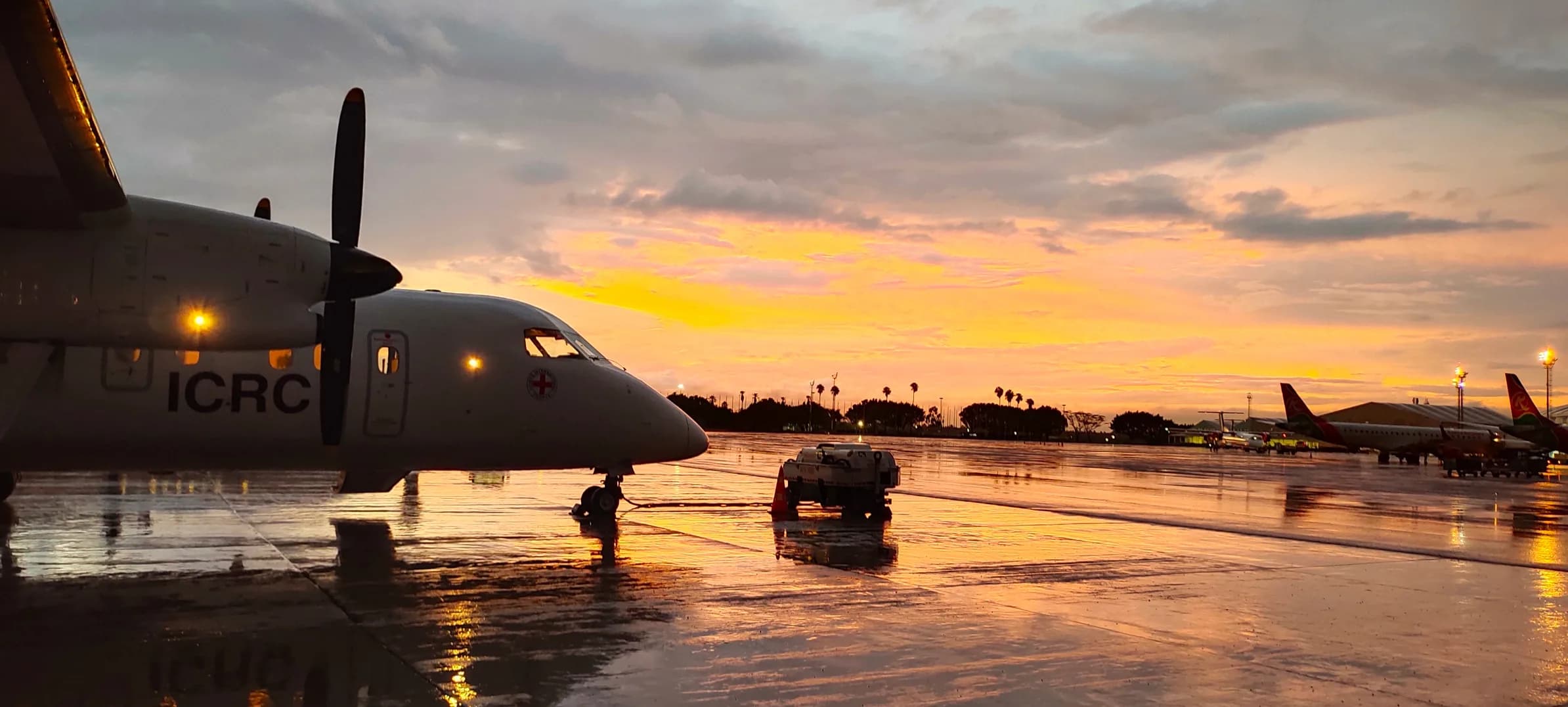
The backbone of the fleet
Dash 8
Built in Canada for short runways. Found plenty in Africa.
- Seats
- 37–50
- In the fleet
- 14
- Cruise
- up to 289 kt
- Take-off
- ~1,000 m
- Lands on
- Runways and prepared strips
De Havilland Canada DHC-8 Series 100 · 200 · 300
Dash 8
De Havilland Canada designed the Dash 8 in the late 1970s as a regional turboprop that could still use short runways, as its earlier aircraft had. It's our largest type. We fly all three of the early series:
Dash 8-100: 37 seats, and Pratt & Whitney Canada PW120A or PW121 engines of 2,000–2,150 shp. The original, and the one we have most of: nine.
Dash 8-200: the same airframe with the PW123C, from the -300's engine family, so it climbs better and carries more when it's hot. Two.
Dash 8-300: 3.4 m longer, with a bigger wing, 50 seats and PW123 engines of 2,380–2,500 shp. Three.
Short, rough strips
At full weight at sea level, a Dash 8-100 or -200 takes off in about 1,000 m and lands in under 800 m. The -300 has Transport Canada approval for gravel runways.
High wing
Engines and propellers sit well clear of stones and dust, and passengers get an unobstructed view down.
Room to breathe
Pressurised to 5.5 psi, so the cabin stays below 8,000 ft. Proper seats and headrests. It's an airliner, not a bush plane.
Cheap to run
Lower operating costs than a jet on the short sectors most humanitarian networks fly.
Dash 8
On board
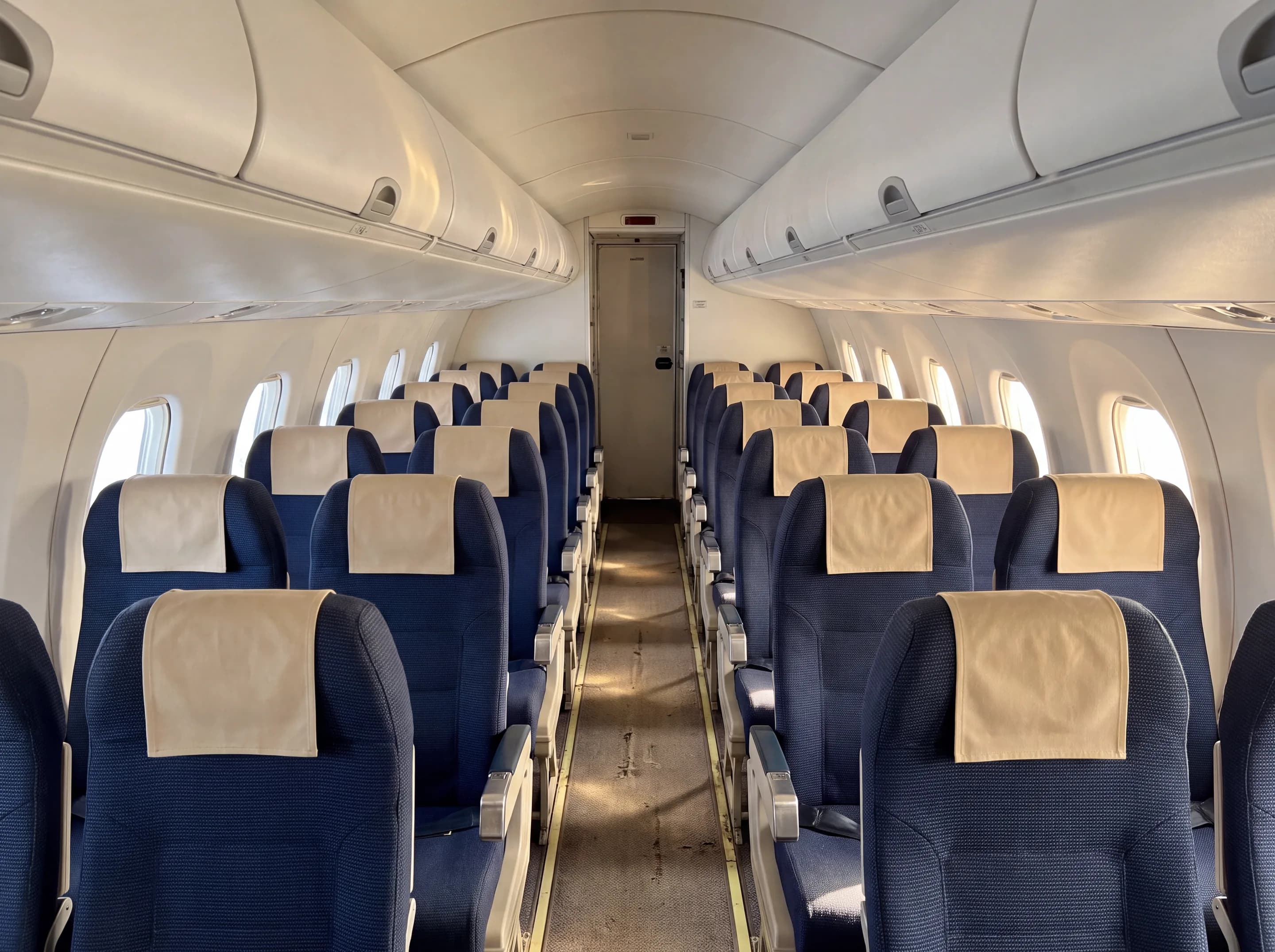
The cabin
Four abreast in a cabin 2.51 m wide and 1.95 m high: 37 seats in the -100 and -200, 50 in the -300, whose cabin is 3.4 m longer.
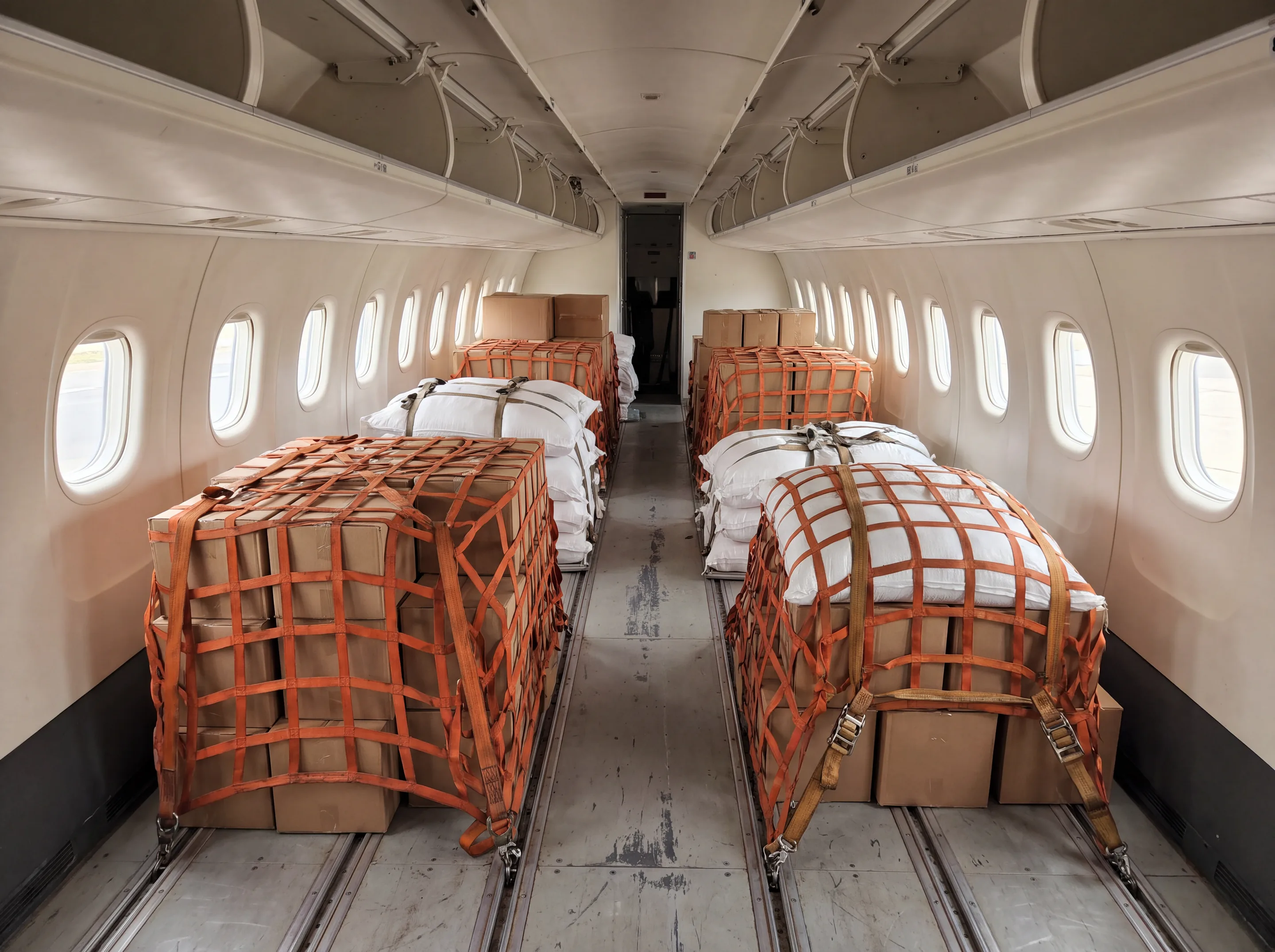
Cargo
Seats out, freight in, for relief and supply runs. Bags go in an aft hold of 8.5 m³ (9.1 m³ in the -300), through a 1.27 × 1.52 m door.
Range
From Wilson: 924 nautical miles with 50 passengers.
That's the Dash 8-300 with every seat taken. The -100 and -200 carry 37 and go further: 1,020 and 1,125 nm. Juba, Mogadishu and Addis Ababa are all inside the ring.
Top view · Dash 8-100
Dash 8
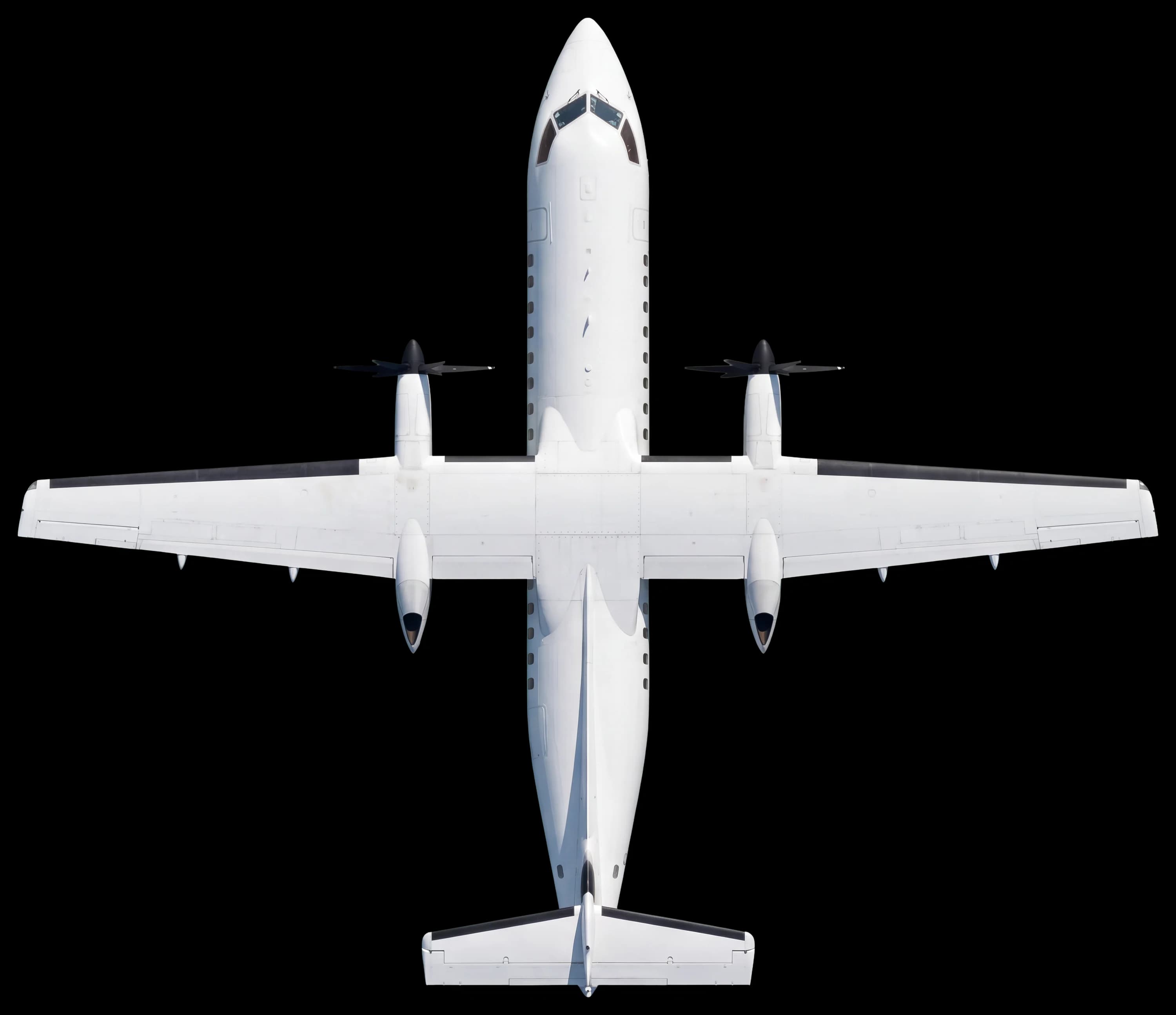
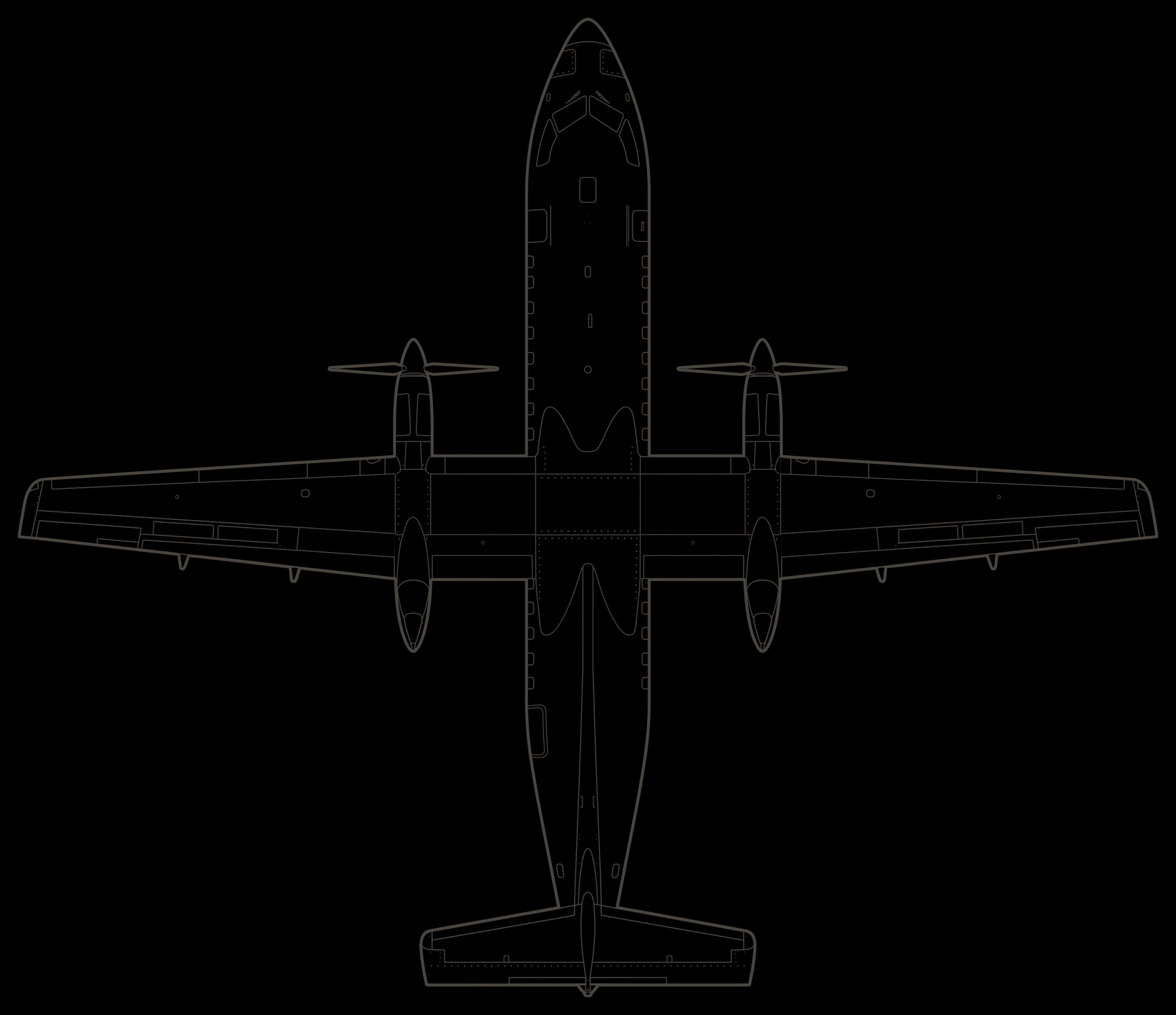
- Wingspan
- 25.91 m
- Length
- 22.25 m
- Height
- 7.49 m
De Havilland Canada DHC-8 Series 100 · 200 · 300
Specifications
- Type
- De Havilland Canada DHC-8-100 (-102, -106), -200 (-201), -300 (-311, -314)
- Crew
- 2 pilots + cabin crew
- Seats
- 37 (-100, -200) · 50 (-300)
- Pressurised
- Yes, 5.5 psi


Figures are de Havilland/Bombardier published data (airport planning manuals, fact sheets) and the EASA type certificates for the DHC-8 and the PW100 engines. Engine power is maximum take-off power; normal take-off ratings are 150–240 shp lower. Range assumes ISA, zero wind and standard reserves. Real payload and range depend on temperature, airfield altitude and runway.
Dash 8
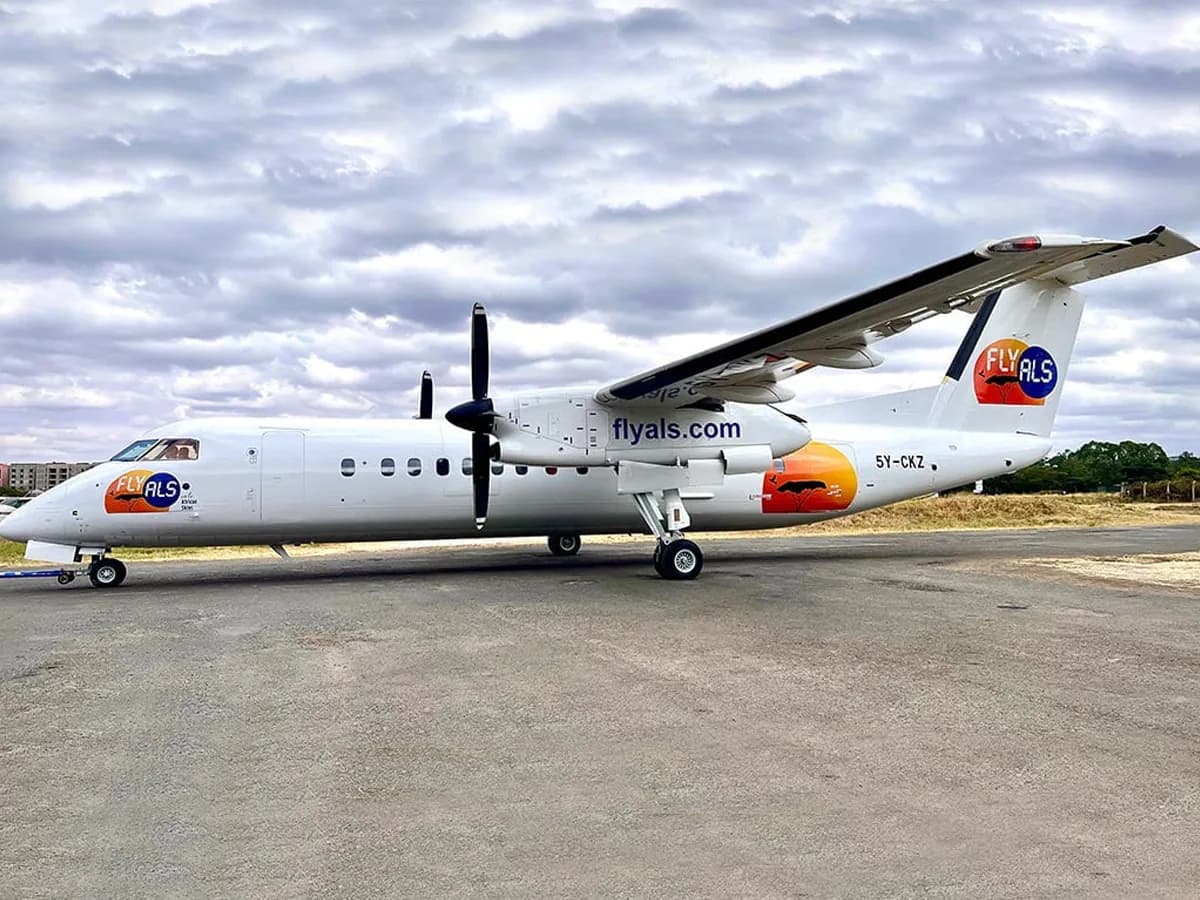
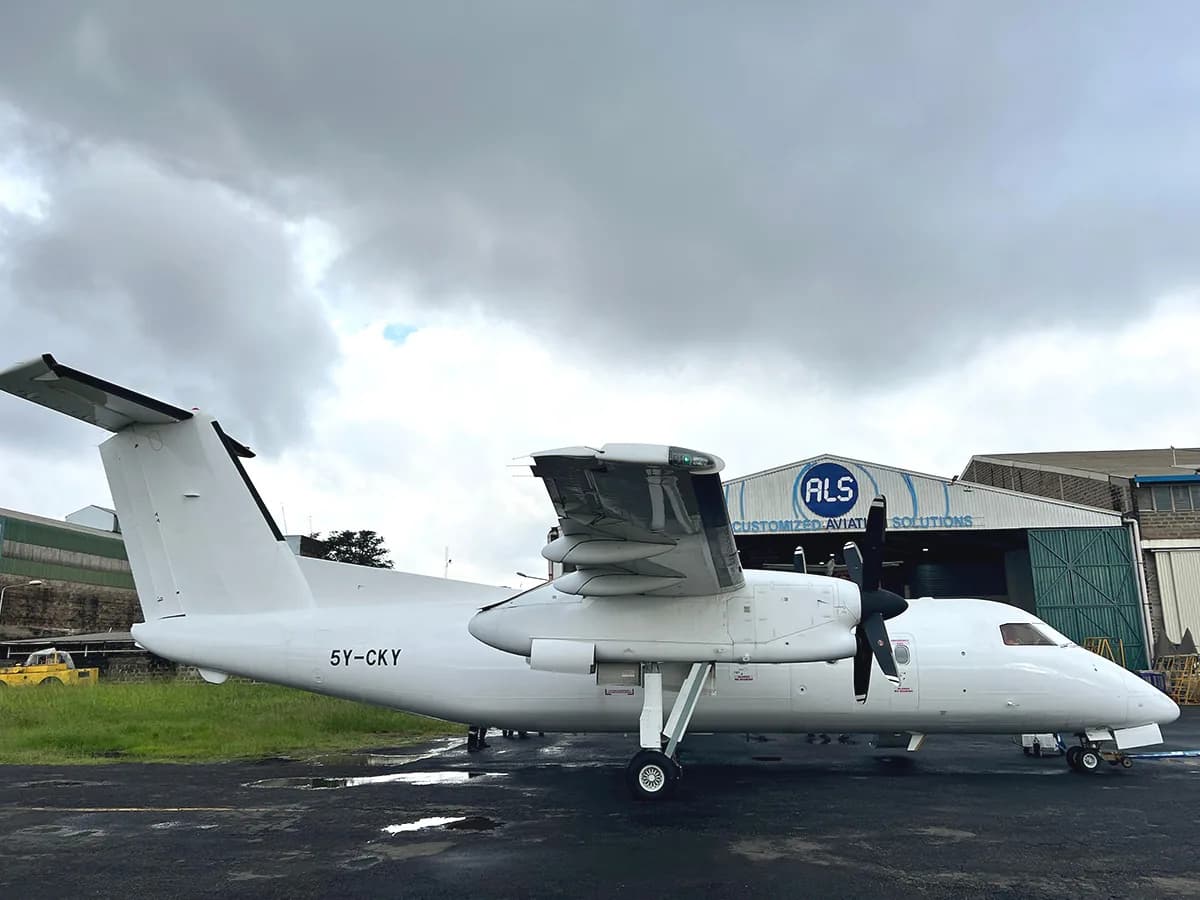
Our aircraft
The other aircraft
Somewhere, someone is waiting for an aircraft.
Tell us where.